
PAUL GOLDSMITH - 10/02/1927 - 09/06/2024
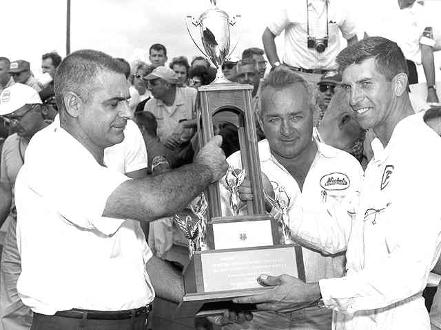
Raised in Detroit, Paul Goldsmith began racing motorcycles as a teenager after the end of World War II. He jumped immediately to American Motorcyclist Association expert status on Harley-Davidson machines, competing while working full time at a Chrysler factory. He was a famous A.M.A. Grand National Championship motorcycle racer during the late 1940s through the mid-1950s. Goldsmith’s first major AMA motorcycle win came in 1952 on the 1-mile dirt track at Wisconsin State Fair Park, now paved and known as the Milwaukee Mile, smack dab in Harley Davidson hometown. In 1953, Goldsmith won the Daytona 200 motorcycle race on the old beach road course, with his Harley prepared by legendary engine builder and tuner Smokey Yunick. He also won the 100-mile race at treacherous Langhorne (Pennsylvania) Speedway. Goldsmith finished second in the AMA standings in 1954 to a protegee and friend from the West Coast
who also achieved success on two and four wheels – Joe Leonard. While still racing motorcycles, Goldsmith tried his hand at stock car racing. Paul's first Cup start would come in 1956 at Atlanta where he would start seventh in his 1956 Chevy but crash out on lap 36 and finish 23rd. His first win would come later that same year at Langhorne Speedway in PA. He started second and led 182 of the races 300 laps; beating second place finisher Lee Petty by seven laps. He won a 250-mile race in 1953 at the Detroit Fairgrounds. In 1953, Goldsmith won the Daytona 200 motorcycle race on the old beach road course, with his Harley prepared by legendary engine builder and tuner Smokey Yunick. He made his final motorcycle start in 1956 and then focused on stock car racing, earning his first NASCAR victory that year in a 300-mile race at Langhorne for Yunick’s team. He was the winner of the final race at the famous Daytona Beach Road Course in 1958 driving the Smokey Yunick owned, "Best Damn Garage In Town" sponsored Ford. while the construction of Daytona International Speedway was underway. In 1959, Goldsmith teamed up with ace mechanic Ray Nichels and dominated the USAC Stock Car circuit in Nichels Engineering machines
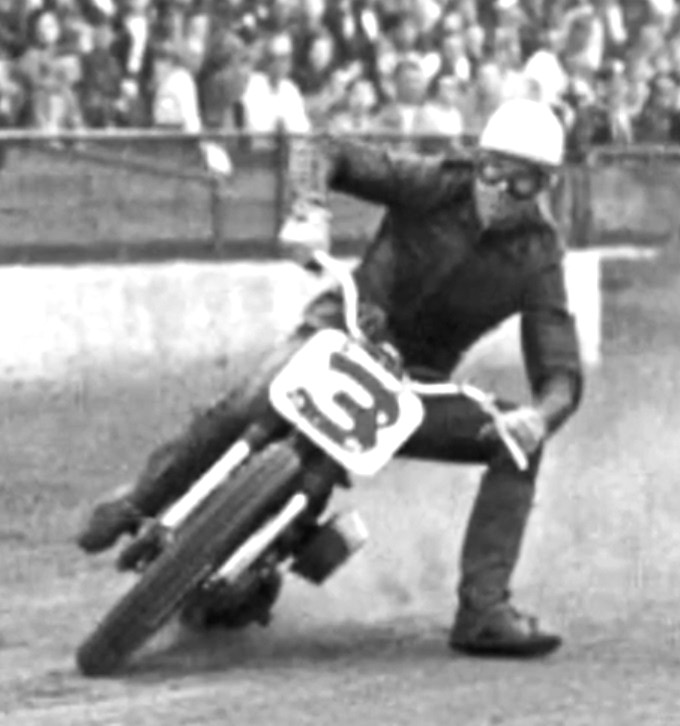

A.M.A. Champion
during the first half of the 1960s. He won the USAC Stock Car championship in 1961 and 1962 and finished second in 1960 and 1965.
Goldsmith won 26 USAC Stock Car races in 85 starts, with 44 top-three finishes. Nineteen of those wins came in 39 starts during his title-winning seasons in 1961 and 1962. West Virginia native Goldsmith made six consecutive “Indy 500” starts between 1958-63. His best finish came in 1960, a third-place result in the #99 Demler Epperly/Offy car overshadowed by the sensational duel for victory between Jim Rathmann and Rodger Ward. Goldsmith also finished fifth in 1959. That strong result came a year after he completed zero laps as a rookie starter in 1958, as he was caught in the multi-car accident that claimed the life of Pat O’Connor. Goldsmith’s best qualifying position was ninth for his final start, in 1963. Incredibly, Goldsmith achieved such success at the top level of open-wheel racing despite making only eight career starts in cars without fenders. All eight races were USAC Championship events, including the six Indianapolis 500 starts. Despite only six starts at Indianapolis Motor Speedway, Goldsmith turned many laps at the Racing Capital of the World as Firestone’s chief test driver. In his NASCAR career, Goldsmith won nine races and earned 59 top-10 finishes in 127 NASCAR starts. His final win came in 1966 at Bristol where he would
start fourth and lead 84 laps. Goldsmith would bypass Jim Paschal (who had to step in as a relief driver for Richard Petty) and lead the last five laps to get the win. These were the only two cars on the lead lap as third place finisher David Pearson was four laps back. Goldsmiths final start would come at Michigan in 1969 driving the #99 Nichols Engineering Dodge where he would start 11th and have engines problems and finish 39th. This was the only NASCAR 600 mile race not held at Charlotte; however the race was rained out just past half way. He was also the only driver to win the Daytona Beach Road course both in a stock car and on a motorcycle. He only ran a few races per year, and posted nine wins, and 44 top five finishes. He also raced in NASCAR's Convertible Series in seven races.

1963Indy 500
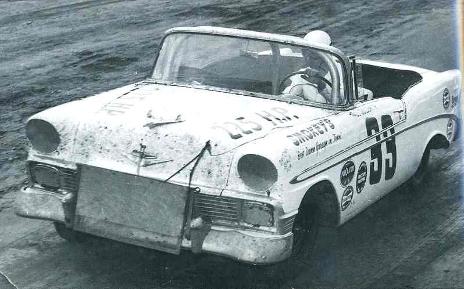
1956 Charlotte
He won at North Wilkesboro Speedway driving for Slim Rominger beating out Lee Petty. In 1966 he finished fifth in the Cup series points chase, and only ran 21 of 49 events. He also participated in one of the most unique events in IMS history, a 24-hour race between two cars Nov. 21-22, 1961. Goldsmith and fellow star drivers Ward, Len Sutton, Fireball Roberts, Marvin Panch and Joe Weatherly alternated between a Police Enforcer version of a Pontiac Catalina and a conventional Catalina in heavy rain, a test of the machinery and drivers. They were the first drivers to compete on the completely paved 2.5-mile oval, as the front straightaway of original brick was covered with asphalt in October 1961. His noteworthy accomplishments on two and four wheels were honored with membership in several Halls of Fame, including the IMS Hall of Fame,
Motorsports Hall of Fame of America, Motorcycle Hall of Fame, USAC Hall of Fame and Michigan Motorsports Hall of Fame. Goldsmith retired as a driver in 1969 to focus on his growing aviation exploits. He was a noted pilot, one of the first drivers to fly himself to and from races. He also trained pilots for China East Airlines, flew parts to races in his plane, and owned an aviation engine repair business and an airport in Griffith, Indiana. Goldsmith also owned a series of ranches and restaurants. Aside from his achievements on the track, Goldsmith left a lasting mark on American motorsports by being at the forefront of technology. Goldsmith is credited with helping to develop water-circulating technology, which served as a precursor
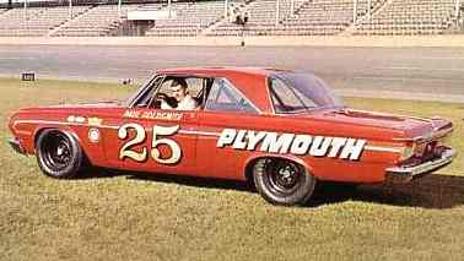
1964 Daytona
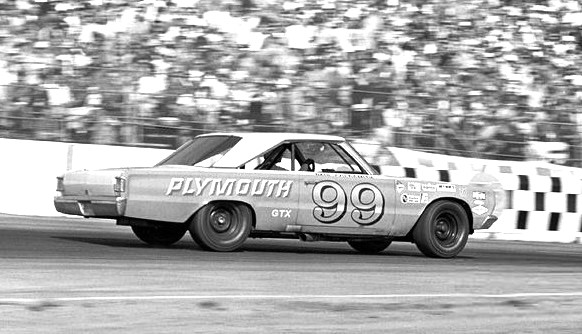
1967 Riverside
to the cool-suit technology that modern day drivers rely on. Some info from WikiPedia
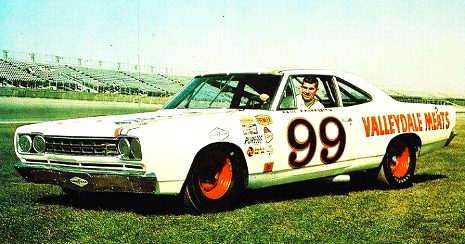
1968 Charlotte
All Photos copyright and are property of their respective owners